Showing posts with label trucks. Show all posts

Monday, October 15, 2012

Heavy Truck Equipment vs a Fast Food Hambuger

image courtesy of http://www.overdriveonline.com


How could these two being going head to head? It seems like a strange comparison to make, but its very illustrative. According to a study conducted by the University of California Riverside, which focused on commercial charbroilers found in burger restaurants, "an 18-wheeler diesel engine truck would have to drive 143 miles on the freeway to put out the same mass of particulates as a single charbroiled hamburger patty."

While what that says about fast food hamburgers and their health effects is best left to other blogs, it also says a lot about diesel emissions from heavy duty equipment.

In 2000, the Environmental Protection Agency moved forward with its scheduled plan to make buses and heavy duty trucks cleaner starting in 2007. Since 2007, new bus and truck models have had to follow strict emissions standards. The UCR study, perhaps unintentionally, highlights the strides heavy duty truck equipment and buses have made since the 2007 standards were put in place. It hasn't always been an easy process, but it is undoubtedly a very important one and it is good to see the gains of all that hard work.

Wednesday, October 10, 2012

Why You Should Always Heed No Truck Route Signs

image courtesy of lifeasatrucker.com

It can be oh so tempting to ignore those no truck route signs you see on certain roads around Boston. Its definitely not a good idea to test your luck, though. Those signs are there for a reason. Maybe its a low bridge. Maybe its a densely populated area. Maybe the road is too narrow to accommodate trucks. Whatever the reason, stay off that road if you're in a truck! Rental companies will not take to kindly to a call from you when you've gotten stuck under a bridge. Nor, for that matter, will the state police or the drivers in the traffic jam caused by a mistake like this. Also, truck rental insurance coverage, should you have signed up for it, does not cover the box, only the cab.

Check out this slideshow from Boston.com showcasing some really good reminders as to why you should pay attention to no truck route signs. Its ok to giggle a little bit at these, just make sure you never make it on to one of these slideshows!

photo courtesy of boston.com


Wednesday, April 18, 2012

Navigating Belmont in a Truck

Here's another helpful truck driving post from our owner Ezekiel. 

image courtesy of leftbankofthecharles.com


There's a bridge in Belmont Center, it's an old railroad bridge and it's pretty low. The clearance posting on it is 10'9" I believe. This bridge causes a lot of problems for a lot of truck drivers. On one hand, you can get a 12'6" straight truck through the very center of it, but even if you fit, it's still illegal to pass through it in an inappropriately marked truck. The problem is that getting from Fresh Pond to the other side of that bridge in a truck legally is a pain. It may look like you can take Blanchard St. to Brighton St. and then cut back to Belmont Center, but that involves no truck routes (they're rather loosely enforced, however). The only official way is to take Rte. 16 (Fresh Pond Parkway) to Rte. 2 to Rte. 60 and then go into Belmont. Belmont is bisected by those train tracks and getting from one side of them to the other requires going around, especially in a truck due to that low-clearance bridge. Options for turning a rig around if you head down Concord to that bridge are slim at best as well.

So, if you're planning to move yourself in or out of Belmont be very careful not only of the no truck routes but also that low bridge in Belmont Center. If you're hiring movers keep this information in mind as well. We may quote you a travel time that seems inappropriate to you, but remember that the way you drive in your car is not the same way we would go about things in a truck, so it may take longer. 

Thursday, April 5, 2012

Navigating Cambridge and Somerville in a Truck

Here's another helpful post from our owner, Ezekiel. If you're planning on renting your own truck for a move in Cambridge or Somerville this information will be a huge help!

image courtesy of dreamstime.com


Getting from North Cambridge to Somerville in a truck can be tricky. Almost all the roads that go from Massachusetts Ave. towards Somerville west of Porter Square are one-ways or no truck routes. This even applies once you get into Arlington all the way to the intersection of Massachusetts Ave. and Rt. 60. The best route to know is Davenport St. in Porter Square. It's a short street that runs from Massachusetts Ave. in Cambridge behind the Porter Square shopping plaza back to Elm St. Somerville. Located on that street are the loading docks and commercial parking for the shopping plaza so it can also be a handy place to turn around if you've missed a turn.

Thursday, February 2, 2012

Diesel Additive, Part 1

Here's another post by our always informative owner, Ezekiel.

Image courtesy of bajaquest.com


We use a diesel additive in our trucks to promote longer engine life, low temperature reliability and better fuel economy. Due to the multiple reasons and benefits of additive this will be a multi-part blog post, with each post focusing on a different element. It's easy to see the financial benefit of getting more miles out of each gallon of fuel and each diesel engine, but there's more to it than that.

ULSD-Ultra Low Sulfer Diesel

Since '06 fueling stations in North America have been selling ULSD. Sulfur content in diesel has a number of effects. One is pollution, the sulfer content in diesel is one of the main contributing factors to the soot that is emitted from a diesel engine. Another effect that sulfer has is that it is a lubricating agent in the operation of the diesel engine. When you drop the sulfer content of your fuel,  the level of lubricity also goes down. Lubricity of fuel impacts engine wear in that a higher lubricity diesel will coat the cylinder walls of the engine with a greater film of oil, thereby enhancing the movement of the pistons and reducing the wear between the piston and the cylinder wall. Lower sulfer content can therefore cause premature wear on moving parts (not just the cylinders, but also other moving parts that come in contact with fuel, like injectors). The fuel companies, the government and the engine manufacturers had come to an agreement about how much lubricity a ULSD fuel should have. Hypothetically at that level there is enough lubricity where premature engine wear is not a factor, however some might dispute that. The real problem with ULSD fuel is that the lubricity agents that they add to the fuel for use in diesel engines is added late in the transportation scheme, so sometimes the lubricity agent is not fully mixed in so you can get very low dosages at the pump, which would potentially lead to low level engine damage. Based on this study we use Optilube XPD in the winter and Optilube summer formula in the warmer months.

Thursday, September 29, 2011

UPDATE: Moving Tip #5: Who to rent a truck from and what to rent with it

photo courtesy of http://www.pensketruckrental.com/

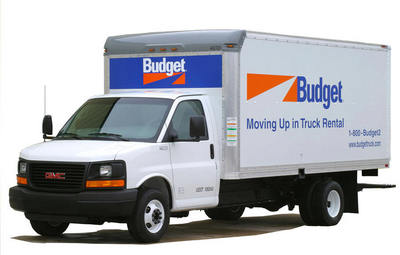
Since our last post about who to rent a truck from we've learned that Budget may no longer be the way to go. We've learned that Budget as a corporation is not providing the kind of money they used to for truck maintenance and they are not replacing trucks at the rate they used to.

As a company, we now rent from Penske if we need to, which isn't often. The couple of times we have rented from them they've been a little bit more expensive than Budget, but that stands to reason if they've got better maintained trucks. Also, around September 1st we couldn't get a rental for just a few days, they wanted us to rent it for a week minimum. This might be because we are a business and not an individual, but its something to watch out for when renting.

Friday, July 15, 2011

Tire Retreads

graphic courtesy of http://www.tiresandcasings.com/used_tires.htm

Some of our trucks already have tire retreads on the and we're looking into buying more. There are many reasons to go this route.

First, what are retreads? They are previously used tires that have their old treads buffed away and new treads applied to the casing. Tires are checked for safety beforehand to make sure they're up to the task.

We like going this route because its cheaper and its more environmentally friendly than buying new tires. Retreads can be done on casings up to 10 times in some cases and the old treads can be recycled for rubber mulch. Rubber mulch is then used for things like gardening and landscaping. Also, new truck tires take an average of 22 gallons of oil to create, while retreading takes only 7 gallons of oil. That's quite a savings.

You can find out more information on retreads at the Tire Retread and Repair Information Bureau (TRIB). Retreads aren't just for truck tires. You can get them for personal vehicles as well. Check out the TRIB site for how to find retailers that sell retreaded tires.

Tuesday, April 26, 2011

Moving Tip #5: Who to rent a truck from and what to rent with it

photo courtesy of http://www.curatormagazine.com/brianwatkins/notes-from-a-budget-truck/

We are frequently asked if we will load or unload trucks instead of doing the whole move from origin to destination. We do moves like this all the time. Of course, we do have some strong preferences about who to rent from if anybody ever asks us for recommendations.

Not all truck rental companies are created equal. Some are excellent, some you want to stay away from. Our go-to truck rental place is Budget. Specifically, Anderson Automotive in Arlington, MA. Budget locations take great care of their trucks and any truck they own is only on the road for a certain number of miles/years. The other really good place to rent from is Penske. They take similar care with their vehicles.

We're not big fans of U-Haul, however. Yes, they're often cheaper, but there's a reason for that. They do not maintain their fleet like Budget and Penske do so you're more likely to have a bad ride or experience some sort of trouble. Obviously, that's not always going to be the case and we know plenty of people who have rented from U-Haul with no problems, but we've also heard about more problems with them than with the other two companies combined.

Once you've decided on a truck rental company and rented a truck you'll want to consider insurance and rental equipment and supplies. Truck rental insurance is a really good idea. We counsel anyone who asks us to get the full package, as much insurance as they will let you purchase. The insurance comes into play should there be an accident of any kind. For instance, Budget says that if you do not have their protection plan "you are responsible for any damage or theft of the equipment up to its full value (as much as $30,000 or more), whether or not you are at fault." This does not include any bodily harm to either you, your passenger or anyone else involved. Each company has various plans to cover your cargo, damage and personal injury. Its a really good idea to read through the options for whatever company you rent from and choose the right option for you.

You can also rent equipment and supplies with your truck rental. Probably the most important moving supply you'll want to get your hands on is furniture pads/moving blankets. These will be used to protect your furniture from dirt, scratches, etc. during moving. You might also want to consider renting a hand truck or two wheeler. Two wheelers can certainly make your move go faster, especially if there's a long walk involved at some point. Other moving supplies, like boxes, tape, bubble wrap, etc, are also for sale through truck rental companies, but these can often be found cheaper elsewhere.

If you'd like us to load up a rental truck for you or unload a truck at your new address we'd love to help you. If you have any questions about rentals, including what size to rent, let us know.

photo courtesy of http://timdr.com/blog

Wednesday, April 6, 2011

Goodbye Ford


Yesterday we dropped off our first ever moving truck at the junkyard. It was sad to see it go, but the truck was in rough shape. It was a 1994 Ford 350 box truck. We did a lot of jobs with this truck and it served us well.

When it was purchased it needed a lot of work. It turned out that a lot of that work as a total pain in the butt. But, it got done, it got spruced up with some rad looking vinyl and went on the road. After  years of faithful service and a lot of maintenance and replaced parts it just became too expensive to keep up, so we had to get rid of it.

In its place we now have a 2005 Isuzu box truck to match our other Isuzu. As we speak the old vinyl is coming off the box so Cy Sign and Banner can come by and put on our usual black and blue design. We're definitely excited to have a new (to us) truck that's in great shape and runs well but we will miss our old Ford a little bit, too.